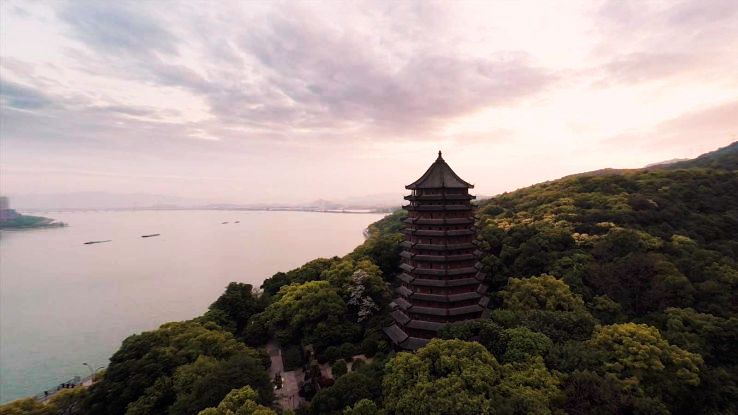
This marvellous creation that stands in the Hangzhou region at the foothills of Yuelun range is a major Pagoda in Chinese territory. The literal translation of the term Liuhe Pagoda means 'Six Harmonies Pagoda' and is built in the honour of the six Buddhist ordinances. The Pagoda was built in the shape of an octagon with wood and brick and measures a staggering 196 feet in height. Constructed during the Northern Song Dynasty (960-1127 AD), Liuhe Pagoda has a spiral staircase inside that leads a traveller to the floors that are decorated with painting and carvings supreme class.
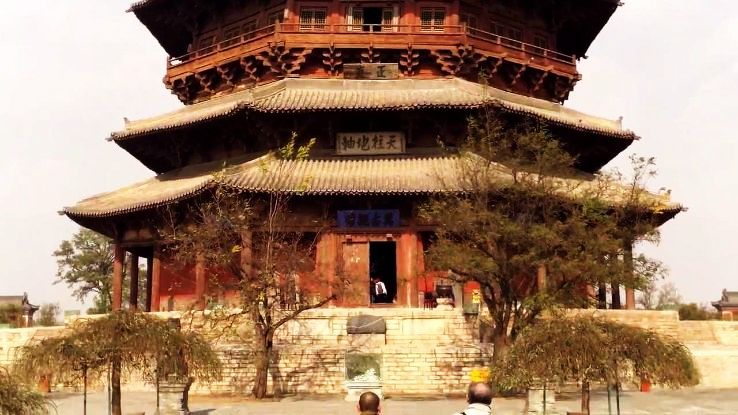
The mere figures associated with this Pagoda are enough to raise awe and honour in the minds of the mass- being in existence for more than 900 years and scaling a height of 221 feet. The entire structure of this monument is solely built with wood and is believed to be a massive temple formerly. The main attraction of the Pagoda is the renowned Sakayamuni Buddha, that is installed in the very first level of it. The sheer magnitude of the statue and the charm of the Pagoda combines together to create a typical Chinese flavour.
Here comes the Tianning Pagoda, the 13-storey Zen Buddhist monument that stands at a whooping 504.6 feet in height making it the tallest Pagoda in the World. Located in Tianning temple in Changzhou, this giant structure is made of extremely solid wood imported from Burma and Papua New Guinea and 75 tons of brass and gold. The 13th floor of the Pagoda is the place where you will find a bronze bell, weighing an enormous 30,000 kilograms and when it rings, it sound resonates up to even five kms. Magnanimous! Isn't it?
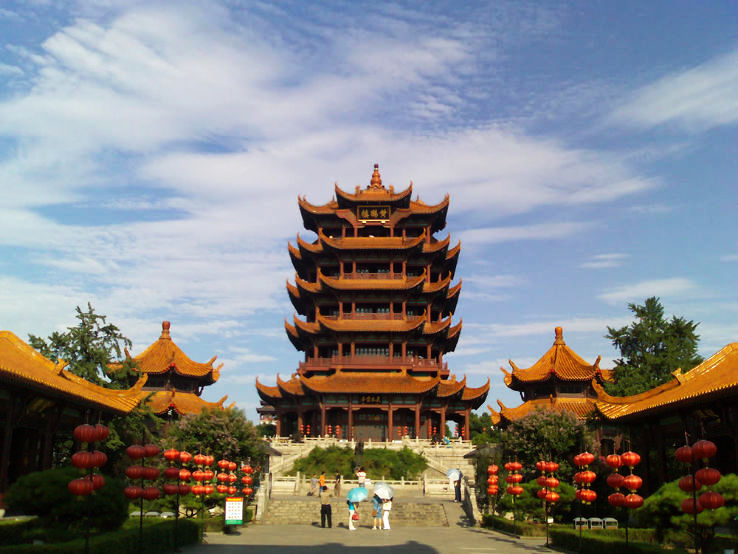
The present structure that a tourist sees by the name of Yellow Crane Pagoda was built in 1985 and is just a modified form of the original Pagoda. That simply because of the calamities that it faced over the centuries. Also referred to as 'The First Scenery under Heaven', Yellow Crane Pagoda is almost synonymous with the Wuhan City. When it was built during the Three Kingdoms Period, it served the army as a observation tower which with time transformed into a beautiful creation evoking the muse in the poets and artists.
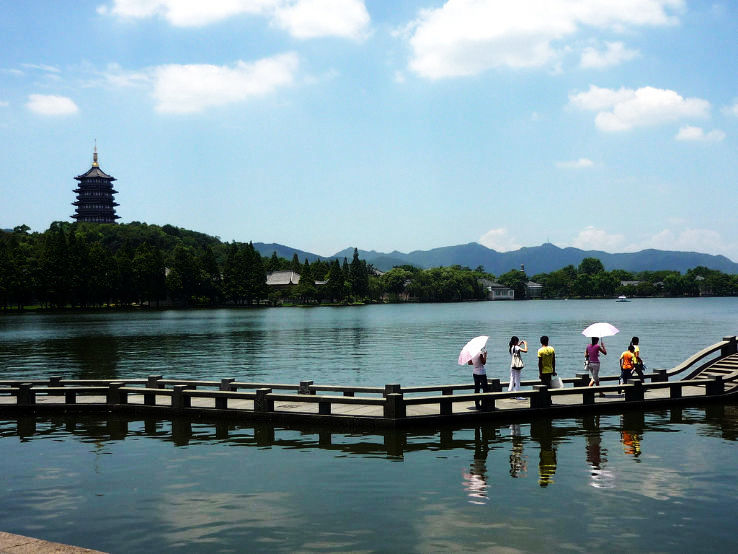
Located quite amazingly on the shore of a lake, this monument was originally built by the King of Wuyue Kingdom to mark the birth of his son in 975 AD. Made of brick and wood, Leifeng Pagoda is an octagonal structure with a five storey interior. Unfortunately, it collapsed all of a sudden in 1924 after bearing several strikes over the centuries. But the history associated with it and its value as a tourist spot led to its reconstruction and finally it was open to public in 2002.
The twin Pagodas of Guilin are like two gems that shine on a night sky when the electric lights illuminate both the enchanting figures situated by the Banyu Lake. The Sun Pagoda measures 134.5 feet and happens to be the tallest copper pagoda in the world; whereas the Moon Pagoda is about 114.8 feet tall. Both the towers are connected by a tunnel that runs through the bottom of the lake.
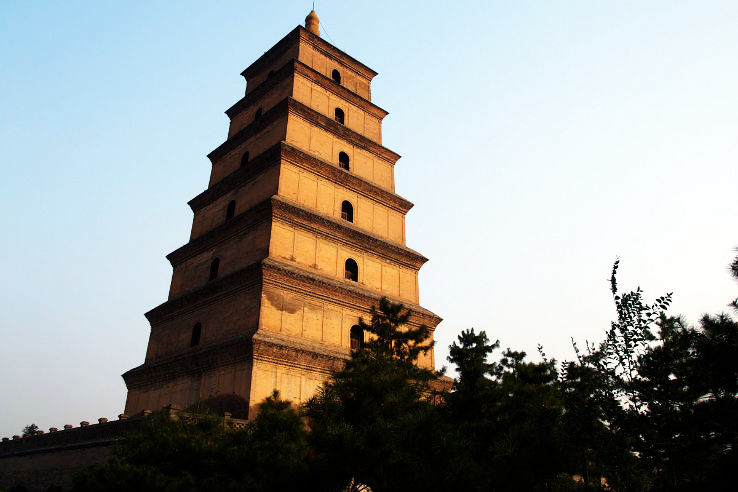
Another masterpiece of the Chinese architecture, the 211.6 feet tall Big Wild Goose Pagoda is considered to be a pious place for the Buddhists and a representative of the Chinese culture. Behind the simple and easy looking shape of this Pagoda lies a popular legend that shows the mercy of Buddha on his followers. The ethnic and unique aura that surrounds the Chinese Pagodas is truly unmatched and can be best realized when experienced in person. Be a part of a history trip and feel the rubbing of the era gone past.